
Thirst Trap
When the man in the shirtless selfie looks just familiar enough

As attentive readers here know, I have been doing a lot of writing about memory, and the ways people who’ve lost their ability to remember and identify can be taken advantage of. If some scammers hide in plain sight (i.e., your grandmother's dirtbag neighbor suddenly offering to drive her to the bank), most operate in the shadows. They are foreign voices on the phone, texts from unknown numbers, people and pitches that sound just familiar enough to our increasingly isolated parents and grandparents, people with perhaps only the TV for company, people who secretly look forward to the daily phone calls from someone claiming to be their broker or a lonely woman named Valentina.
Anyone who interfaces with the digital world realizes we are all constantly being massaged and softened to make the glide into the uncanny valley as frictionless as possible. How many times a day do you look at image and say, “Wait, is that real?” I think almost all AI art is terrible and plasticine, but maybe I’m wrong. Maybe something Claude created moves me as much as a Ruscha or a Vermeer.
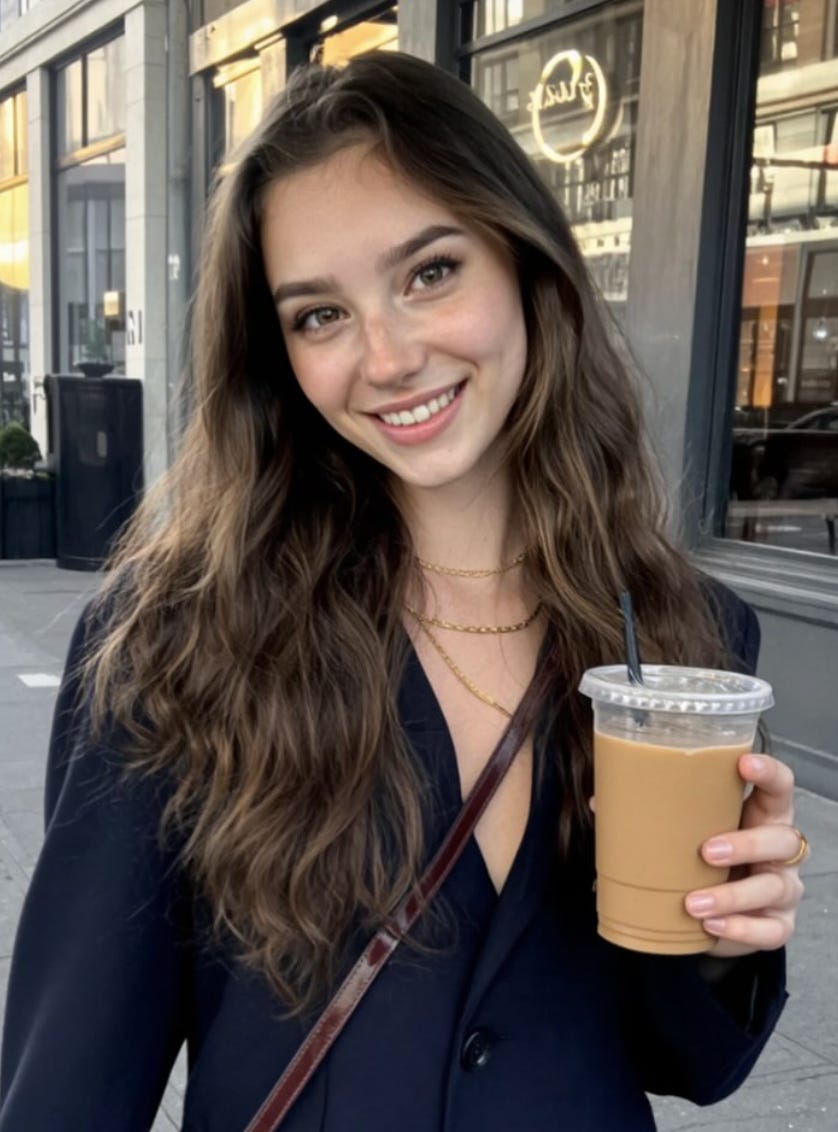
The most recent episode of Smoke ‘Em If You Got ‘Em touched on how we consume art is changing, and what our litmus tests are for various media. Mine is if it bleeds, which I mean both literally and figuratively. I think the AI-generated actress Tilly Norwood is cute and all, but she’s built by consensus, there is no mystery. She might be made to simulate grief or love or embarrassment or awe, but because she cannot experience these things, I question whether she can make us feel them. Art at its best is a transcendent experience. I understand that people—myself included—just sometimes want to be entertained, and I suppose Tilly does this. But she does not bleed and thus, cannot make me bleed (so to speak).
I interrupt this post to say that as soon as I typed that last sentence, my phone rang. It was my daughter Tavie, screaming, “______ just had her baby!” _______ being her best friend, a second daughter to me since she was 15, who this morning at 5am texted Tavie, “She’s here, she’s perfect, she’s ours.” That, my friends, bleeds.
But to get to the titular section of this post: at least a decade ago, I started to receive what many of us received, texts and phone calls from numbers that were almost identical to mine. They were always garbage and of unknown ambitions. I haven’t gotten many in the past few years, or did not until yesterday, when a text popped through from a number two-numbers off from my own. Here it is:
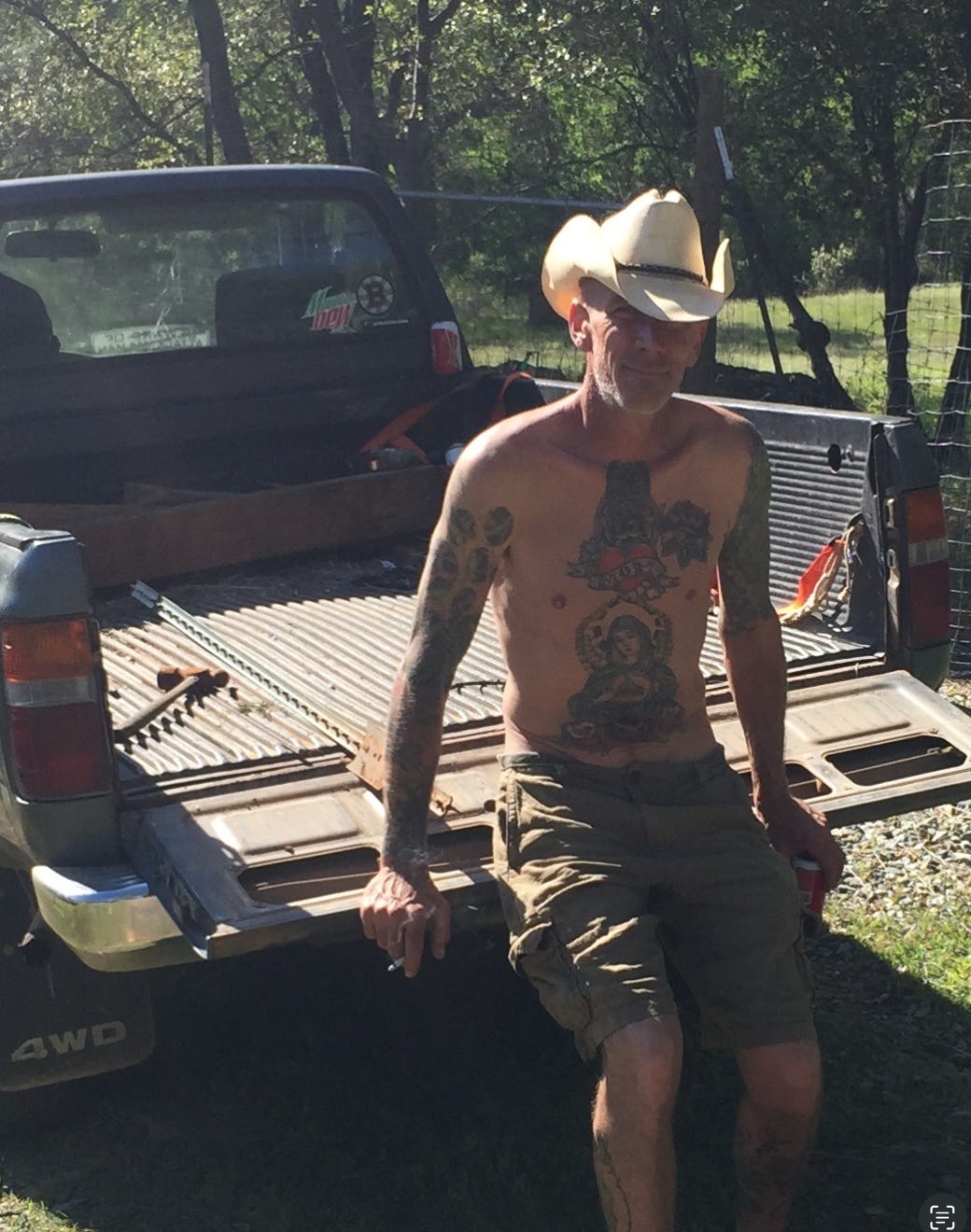
There was no message, just the photo. My immediate thought of it being another spam text was supplanted by, but why? Did I perhaps know this person? I came up with two people I am very close to who have similar profiles, as it were, as they are both fully tatted, drive pick-ups, smoke cigarettes and wear beat-up hats. Obviously it was neither of these men, nor have I posted images of myself with either of them in several years. So how did this confection come about? How much spidering into my past did this bot do? Did it expect a response? And was my asking myself any “… this is just familiar enough” questions indicative of just how softened I have become to these pitches?
I stand in no camp when it comes to whether you want to embrace or combat AI; you do you. I am of the mind to agree with former Nebraska senator Ben Sasse who, during an April 2026 podcast with New York Times Opinion writer Ross Douthat, said, “Ninety percent of the time somebody will ask you some version of the question, ‘Do you think A.I. is going to bring heaven or A.I. is going to bring hell?’ And the right answer is: ‘Yes.’”
In the meantime, I leave my phone home a lot of the time, you obviously miss a lot when you’re staring at it, for instance, looking out from the terrace of my new building, and the stories to be made from the view therein.